

Sixty Years of Sanur’s Most Contested Landmark: the Bali Beach Hotel
Walk down to Sanur’s beach just after sunrise, when outrigger canoes glide across the calm reef lagoon and the morning air smells faintly of salt and wet sand, and one silhouette still greets you before the coconut palms do. Rising ten storeys straight out of the shore, the main tower of Bali Beach Hotel looks like an out-of-place piece of 1960s modernist structure that wandered onto a fishing coast and decided to stay. Its story is equal parts grand ambition, historical irony, quiet folklore, and a timely lesson in what happens when builders forget to ask an island how it actually likes to live.
Lighthouse Dreams and a Forgotten Sense of Place
Conceived in 1962 at the suggestion of Indonesia’s first president, Sukarno (a half-Balinese himself), before the nearby Tampaksiring Palace was even finished, the hotel began with a circular twist. Development funds came from Japanese Second World War reparations, yet the construction contract went straight to a Japanese firm, Taisei Construction, working alongside Indonesian state builder PT. PP. By the time the doors opened on 1 November 1966, Sukarno had stepped back from office, leaving Sri Sultan Hamengkubuwono IX, Indonesia’s second vice president, to inaugurate the hotel while InterContinental Hotels, then the hospitality arm of Pan Am, stepped in to host airline crews and trans-Pacific travellers.
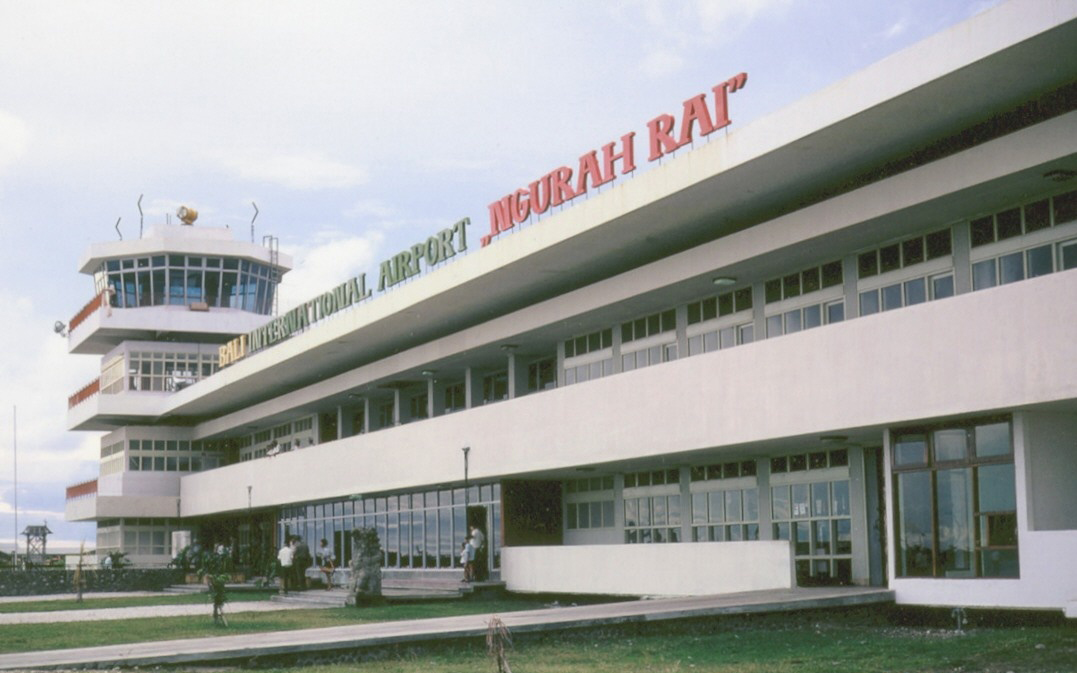
To understand why a 40-hectare beachfront complex with 605 tower rooms and 41 cottages rose on a quiet Balinese shore in the mid-1960s, it helps to remember the mood of the era. Across Indonesia, families were navigating fierce hyperinflation, stretched household budgets, and long queues for basic daily goods. Even so, Sukarno believed a young post-colonial republic needed bold architectural beacons, known as lighthouse projects, to announce its confidence to the world. That same impulse drove Indonesia’s USD 2.5 million pavilion at the 1964 New York World’s Fair, where Sukarno insisted on securing a plot right between the American and Soviet pavilions in Queens to showcase Indonesian art and independence on a global stage. Closer to Sanur, filling 605 rooms also meant re-engineering how travellers arrived. Between 1963 and 1969, workers reclaimed limestone from the Ungasan cliffs and sand from western rivers to extend a modest 1931 grass landing strip out into the sea, transforming Tuban Airport into Ngurah Rai International Airport so long-haul jets could land thirty minutes from the hotel lobby.
Yet in the rush to signal global modernity, one crucial ingredient was left off the blueprint: Bali’s own architectural grammar and sense of place. Balinese towns and villages were shaped around human proportions, open courtyards, pitched roofs, and low-slung temple gates that never competed with the horizon. Dropping a ten-storey concrete slab onto Sanur’s shoreline was quite a reminder of how easily big-picture ambition can overlook the subtle rhythms of soil, wind, and daily ritual.
Saving the Horizon
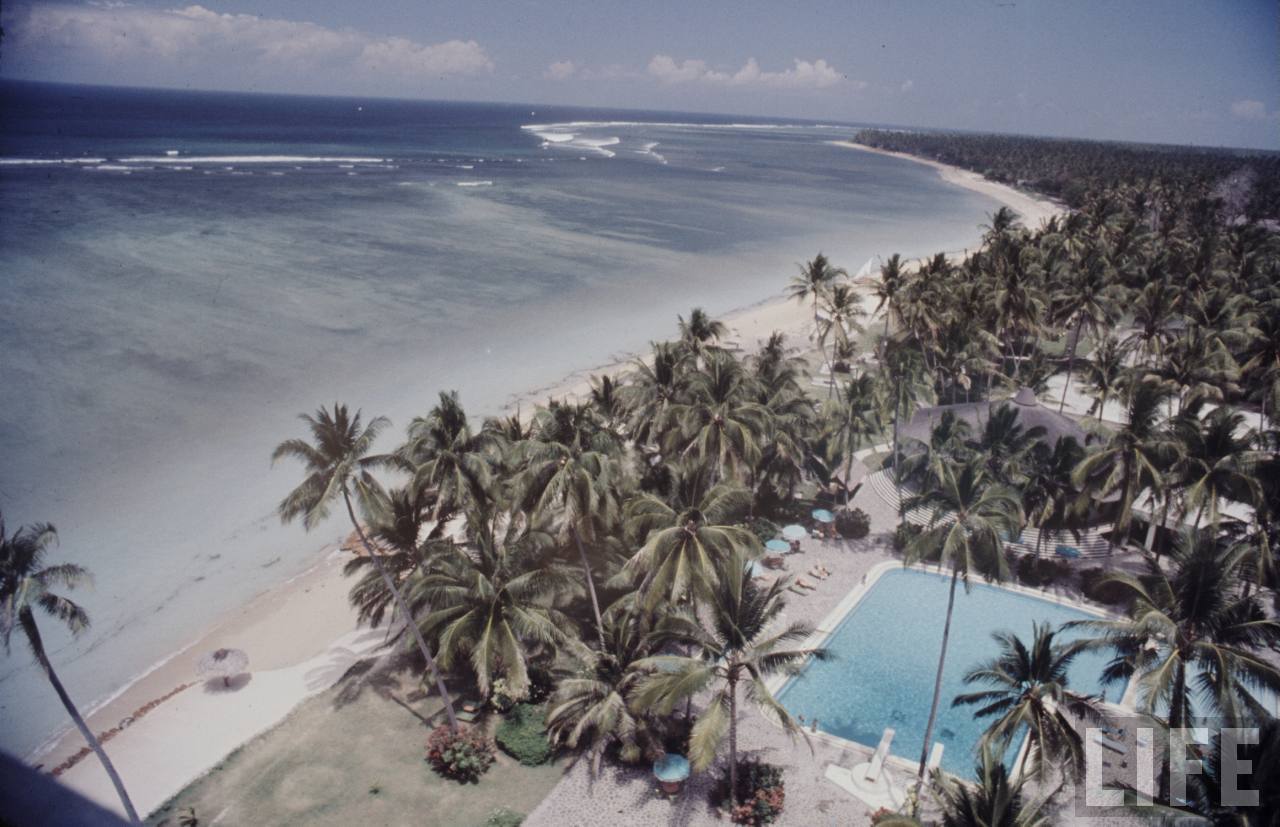
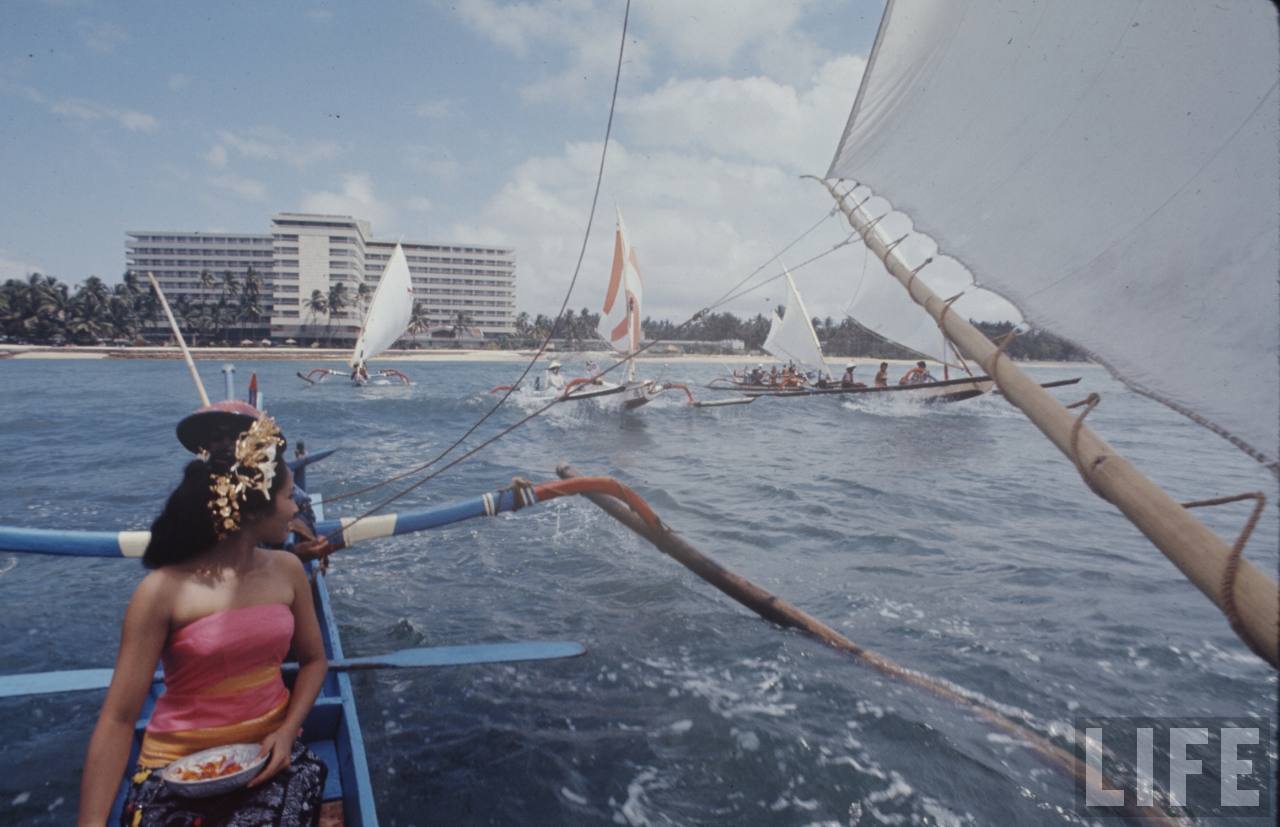
Once guests checked in, the Bali Beach InterContinental functioned like a cheerful self-contained town facing Mount Agung and Nusa Lembongan. There were four specialty dining rooms, a casual eatery, two lounges, three bars including a poolside counter, two swimming pools, tennis courts, a golf course, car and sailboat rentals, an on-call doctor, and dedicated desks for airlines and the postal service. By 1969, LIFE magazine photojournalist Co Rentmeester was photographing guests enjoying barefoot feasts at long tables adjacent to the pool while Balinese dancers performed under the stars.
Outside the hotel gates, however, the ten-storey tower sparked a lively civic conversation. Wija Waworuntu, founder of nearby Tandjung Sari, joined outspoken Sanurians and Denpasarese in voicing concern over the building’s scale and pressing the government to protect Bali’s architectural context and skyline. Rather than letting concrete towers multiply unchecked down the coast, residents, cultural voices, and planners turned that unease into constructive policy. Their pushback indirectly informed the French planning consultancy SCETO’s 1970 study and Governor Soekarmen’s November 1971 decree establishing Bali’s famous 15-meter building height limit, declaring that no new building should rise taller than a coconut tree. Thus, the very tower that momentarily forgot Bali’s sense of place ended up becoming its accidental guardian, remaining the tallest hotel on the island ever since.
The Stone Reliefs That Refused to Bend
During construction, Sukarno commissioned Yogyakarta realist painter and sculptor Harijadi Sumodidjojo to carve a monumental 23-metre-long andesite stone relief titled Indonesia yang akan Datang (The Indonesia to Come). It was the second half of a remarkable two-hotel commission. Just prior, between 1964 and 1965, Sukarno had entrusted Harijadi and his Sanggar Selabinangun studio team with carving the welcome wall at Yogyakarta’s Hotel Ambarrukmo (now Royal Ambarrukmo Yogyakarta), a monochrome andesite relief titled Untung Rugi di Lereng Merapi (Profit and Loss on the Slope of Merapi).
Taken together across 1964 to 1966, the two stone walls form a chronological and thematic pair across Sukarno’s war-reparation hotels. Where Profit and Loss on the Slope of Merapi (1964–1965) looked inward at how ordinary Javanese villagers negotiated daily survival, volcanic danger, and quiet grace in the shadow of Mount Merapi, The Indonesia to Come (1965–1966) carried that same realist empathy forward onto a young nation’s horizon of work and aspiration. Working from temporary barracks on the Sanur hotel grounds, dozens of sculptors from Harijadi’s studio chiseled a lively panorama of farmers, fishermen, dancers, motorcycles, trucks, an aeroplane, and a central portrait of Sukarno cradling a child.
Yogyakarta received the completed opening chapter just before the national upheaval of 1965 and 1966 stopped state funding overnight, leaving Sanur with the unfinished second act. Left without wages, Harijadi refused to abandon his crew or their chisels. He asked his sister Sudarmi and brother-in-law Djakaria Suryakusumah to convert the studio’s vehicle into an improvised passenger shuttle running between Denpasar and Singaraja, using the ticket fares to buy rice and carving supplies. By early 1968, hotel management asked the artists to vacate the barracks for staff housing and eyed the lounge wall for a shopping arcade, prompting the team to relocate a kilometre away to Banjar Pekandelan.
Soon after, over a quiet dinner arranged by a mutual friend, management offered Harijadi a tempting deal: the state would restore full funding so he could finish the relief, provided he chiselled Sukarno’s likeness off the wall. Harijadi declined on the spot. Because he stood firm, the 23-metre relief remains candidly incomplete today. Step close to the stone and you can still spot raw pencil sketch lines and half-carved figures emerging from rough rock, echoed by smaller garden carvings around the grounds whose makers paused mid-stroke when budgets ran dry. Rather than feeling unfinished, those raw chisel marks give the building human honesty that polished marble rarely achieves.
Fire, Folklore, and a Sculptor Who Grew Alongside the State
The decades ahead brought plenty of unexpected turns. In the late 1960s, a state policy fixing room rates at government-owned hotels weakened the property’s competitiveness, gradually dulling its upkeep until InterContinental bowed out in 1979. State operator PT Hotel Indonesia International took over, renaming it Bali Beach Hotel and expanding the garden cottages from 41 to 111 units.
Then, on January 20, 1993, a dramatic fire swept through the main tower and cottages, sparing only two spaces: Room 327 and Cottage 2401. Island folklore immediately linked their survival to Ratu Pantai Selatan, the spiritual queen of the southern sea, and to Sukarno himself, even though the first president had never actually slept in either room. PT PP returned to restore the complex, which reopened in September 1993 under President Soeharto as The Grand Bali Beach.
Welcoming guests inside the restored lobby stood Raja Pala, a bronze sculpture inspired by Balinese folklore and crafted by Tabanan-born sculptor I Nyoman Nuarta. Four years earlier, in 1989, Nuarta had conceived an even more audacious Balinese landmark: the colossal copper-and-brass Garuda Wisnu Kencana statue in Ungasan. Rising 121 metres tall with its pedestal upon completion in 2018, Garuda Wisnu Kencana stirred intense island-wide debate over sacred spatial direction and Bali’s 15-metre height cap, proving that the skyline conversation sparked by Sanur’s beach tower was far from over.
In many ways, Raja Pala sits near the starting line of a remarkably close, multi-decade working relationship between Nuarta and the Indonesian government that continues to this day. Under President Soeharto’s administration, Nuarta’s monumental metalwork earned early backing from Tourism Minister Joop Ave for Garuda Wisnu Kencana alongside state commissions such as Surabaya’s Jalesveva Jayamahe naval monument. Decades later, under President Joko Widodo, that bond grew deeper still: Widodo officially inaugurated Garuda Wisnu Kencana in September 2018, welcomed Nuarta’s Jokowi Ngebut sculpture at Lombok’s Mandalika Circuit, and selected Nuarta’s sweeping copper-and-brass Istana Garuda as the centerpiece presidential palace for Indonesia’s new capital, Ibu Kota Nusantara (IKN), in East Kalimantan. Awarded the national Bintang Budaya Parama Dharma medal in August 2025, Nuarta has remained an active state designer into President Prabowo Subianto’s administration, coordinating ceremonial monuments and legislative-district works at IKN. Seen alongside that trajectory, the bronze figure in Sanur’s lobby is a telling early marker in a career spent translating Indonesian state ambition into metal.
Sixty years after its first foundations were poured into Sanur’s sand, the ten-storey giant sits apparently peacefully within its revitalised coastal gardens. With its crisp mid-century lines, unhurried views across the lagoon, and a 23-metre stone wall still waiting for its final chisel strokes, it stands as an eccentric reminder that architecture works best when it listens to the land around it, and that even a giant out of scale can help an island protect its horizon.