
Tuban Airport
The Beginning
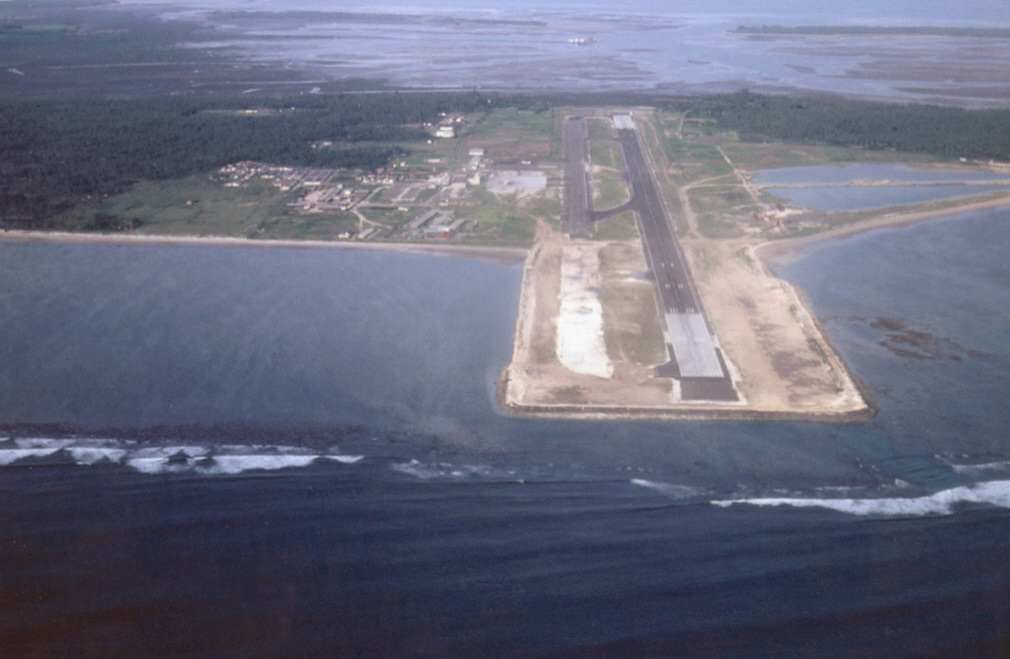
The story of how we arrive in Bali usually begins with a sweeping window view of limestone cliffs giving way to a sudden ribbon of tarmac that appears to float entirely on the Indian Ocean. It is a spectacular welcome, designed to frame the island as an effortless, ready-made paradise. Yet, if you look closely at the coordinates beneath the wings of the plane, you are looking at the literal cradle of southern Bali’s modern history. Long before it bore the name of the national hero I Gusti Ngurah Rai, this vital sliver of land was known simply as the Tuban Airport.
Understanding this strip of land requires looking back to 1931, when the Dutch colonial administration cleared a modest, 700-meter grass runway at the narrowest point of the island’s southern tail. The location was chosen for purely practical reasons of colonial governance and trade, carved out right next to a quiet village burial ground. In those early days, arrivals were small, intimate affairs. A handful of thatched huts met the occasional propeller plane, carrying a grand total of just a few hundred adventurous visitors a year throughout the entire 1930s. These early travellers were mostly European artists, musicians, and anthropologists who came to document a culture they feared was on the brink of vanishing. It was an era of slow travel, where the journey itself required patience, and the destination demanded a level of quiet reverence.
The airport changed hands during the turbulence of the 1940s, with Japanese forces expanding the track to service military operations. But it was in the post-independence era that the true transformation of Tuban began. Recognising the global fascination with the island, President Sukarno initiated a series of ambitious national projects in the late 1950s and 1960s to open Bali directly to the international community. The humble airport was earmarked to become a grand gateway. This shift effectively laid the foundation for the tourism boom that would soon define the landscape of Kuta, Sanur, and the wider southern peninsula.
The Expansion
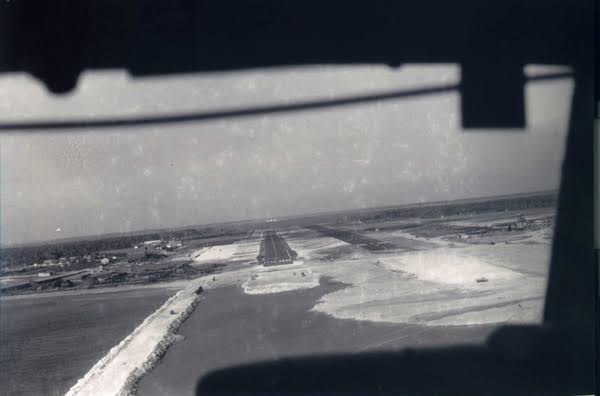
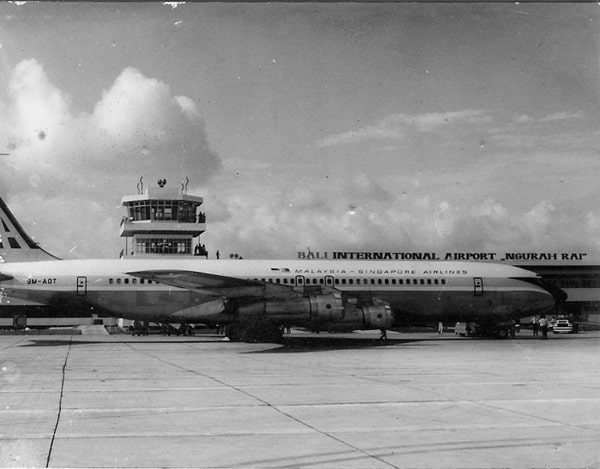
To welcome larger, long-haul aircraft, the land had to undergo an unprecedented engineering feat. Between 1963 and 1969, workers gathered limestone from the nearby cliffs of Ungasan and sand from western rivers to reclaim the sea. They extended the runway significantly, pushing it nearly a kilometre out past the natural shoreline. When the international terminal officially opened in the late 1960s, it changed the relationship between the island and the rest of the world forever. What was once a journey of days became a matter of hours.
The real golden era of air travel arrived in the late 1980s and blossomed spectacularly into the 1990s, fuelled by the government’s grand Visit Indonesia Year 1991 campaign. This wasn’t just a marketing push; it was an institutional obsession. Backed by a massive USD 113 million loan from the Japanese government to expand Ngurah Rai yet again, the state set out to prove it could play in the big leagues of global aviation.
Suddenly, Bali was the centrepiece of glamorous, multi-continental island hopping. Garuda Indonesia deployed its shiny new McDonnell-Douglas MD-11s on a legendary, ultra-long-haul route that effortlessly stitched together Jakarta, Bali, Honolulu, and Los Angeles. Meanwhile, Japan Airlines (JAL) inaugurated regular, high-density Boeing 747 flights connecting Tokyo, Jakarta, and Bali. These flights brought a wave of sophisticated travellers who treated the long flight across the Pacific as an unhurried prologue to their holiday. To house this new influx of jet-setters, the Indonesian government already partnered with the World Bank to develop the Nusa Dua enclave, adding over 2,000 pristine resort rooms managed by the Bali Tourism Development Corporation (BTDC). The vision, initiated in 1973, was simple: quarantine the wealthy travellers in a manicured, gated paradise on the Bukit peninsula, ensuring they could consume their tropical daydreams without interrupting the local village rhythms nearby.
Environmental Impact
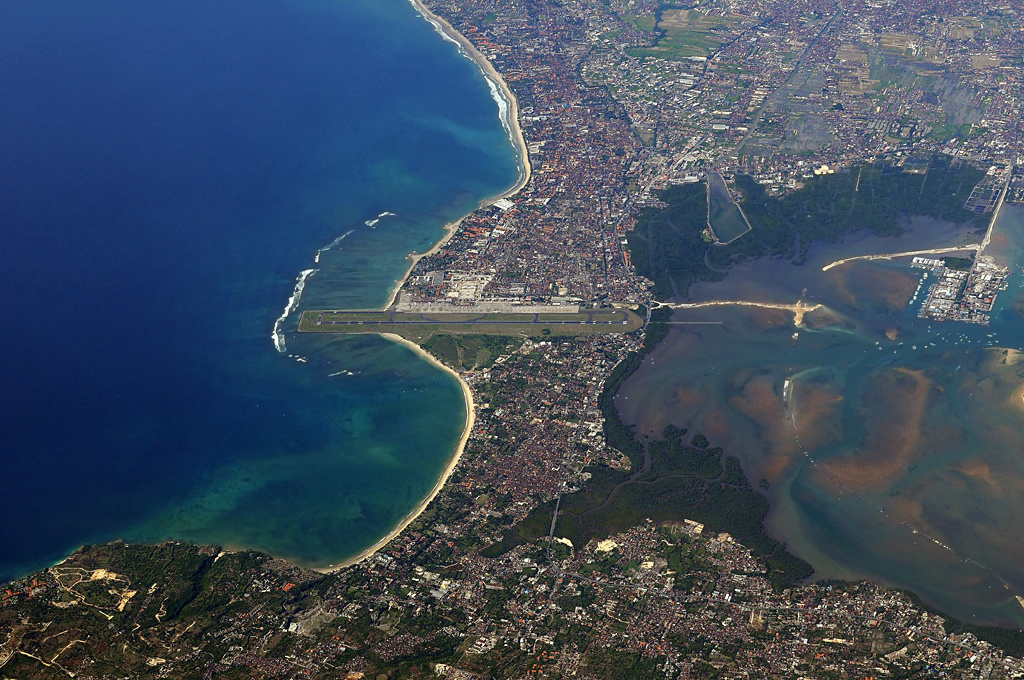
This rapid infrastructural development, however, came with a quiet cost to the surrounding coastline. The long, solid finger of the reclaimed runway acted as a massive artificial barrier, completely interrupting the ancient, natural longshore currents that had balanced the coast for centuries. Shortly after its completion, severe coastal erosion began to take a visible toll on Kuta Beach to the north. The natural movement of sand was blocked, causing beaches to narrow dramatically and threatening the very coastal spaces that people had traveled across oceans to see. Since the runway construction, Kuta Beach has lost over 30 metres of its once-wide shoreline to the ocean, transforming what was once a gently sloping paradise into a steep drop-off that routinely eats through expensive beach paths. Over the decades, subsequent expansions to accommodate wide-body jets have only amplified these delicate marine adjustments, requiring a continuous cycle of artificial breakwaters and sand nourishment just to keep the postcard image intact.
It is here that we can pause to reflect on the beautifully consistent math of the central and regional planning departments. For decades, the official vision of success has been a purely numerical one, focused with laser precision on expanding arrivals and breaking annual records. There is a magnificent irony in the way the Indonesian government celebrates its record-breaking data, operating like an overenthusiastic shopkeeper who measures the health of his business solely by how many people crowd into the doorway, regardless of whether the floorboards can actually hold the weight. The terminal itself is styled with classical stone split-gates and traditional roofs, but the policies inside treat the island primarily as a high-volume transit hub where the main goal is simply to keep the conveyor belts moving.
Now…
When the state automatically treats a ten percent year-on-year increase in passenger arrivals as an absolute victory, it politely skips over the side effects, like the fact that local regencies have to abruptly allocate billions of rupiah from public funds just to build emergency breakwaters and patch up the eroding sand at Kuta Beach. When an economic model prioritises raw data over human scale, the unique identity that made the destination magnetic in the first place risks being overshadowed by the sheer logistics of handling it.
The history of the old Tuban Airport serves as a reminder that travel is at its best when it moves slowly, respects its surroundings, and remembers that a genuine welcome cannot be measured by a headcount. As we look toward the future, the invitation is there for both planners and travellers to slow down, look beyond the statistics, and ensure that our arrival leaves the land just as beautiful as we imagined it to be.